Exclusive 2026 access is here. Shop now!

Robusta
Beyond the Bean: How Madagascar’s Smallholder Farmers Are Rewriting the Rules of Robusta
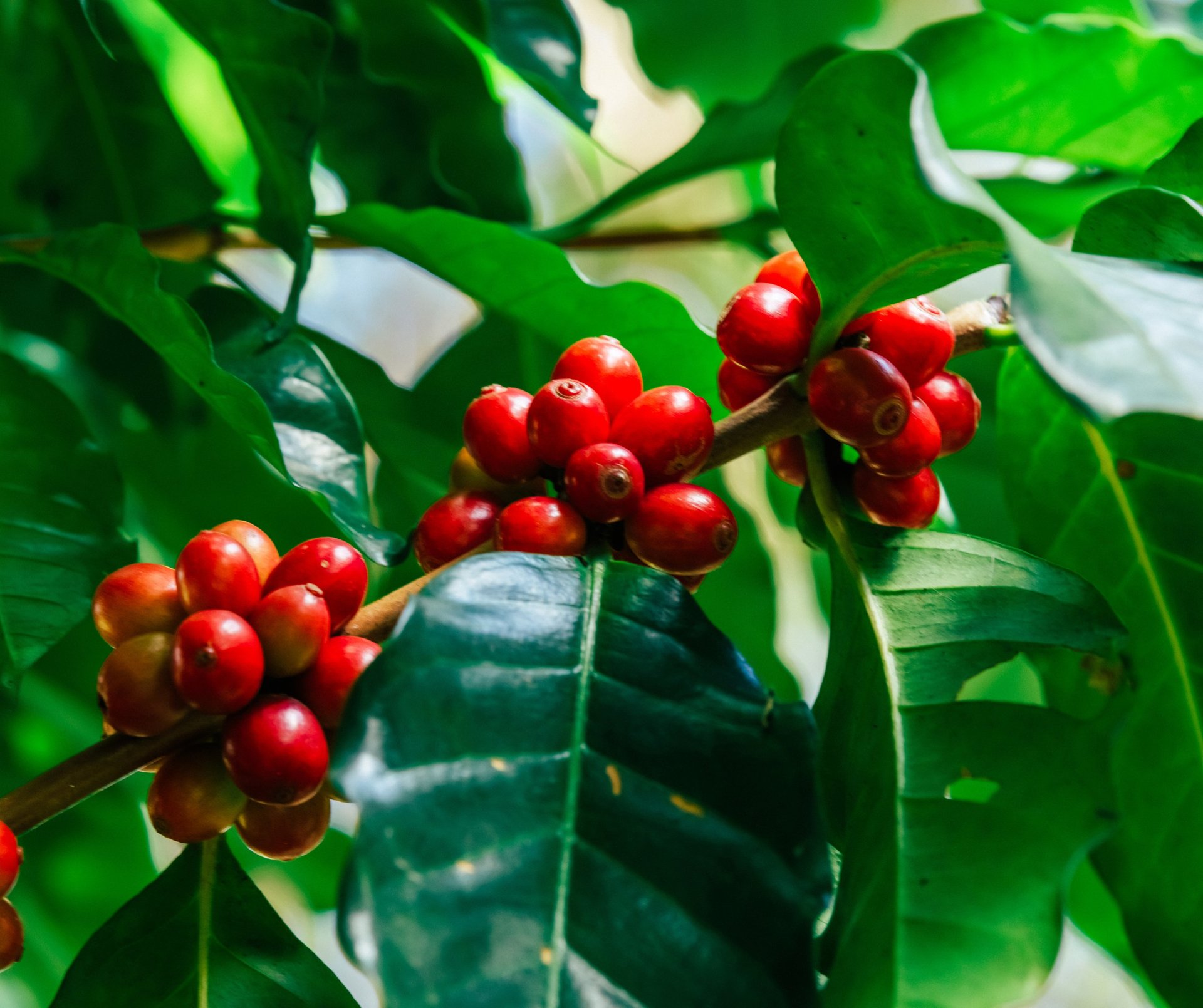
At Kanto Coffee, we believe that great flavour starts long before the roast. It begins in the soil, with the farmer, and with a deep respect for the agricultural heritage of the plant. When we set out to source our Robusta from Madagascar, we weren’t just looking for the bold, full-bodied profile this terroir is known for. We wanted to understand how it actually gets into the cup. What we found is a story of agricultural evolution that challenges everything you thought you knew about “commodity” coffee.
2/13/20263 min read
Not Just a Lowland Crop
For decades, the conventional wisdom was simple: Arabica goes in the mountains, Robusta stays in the hot lowlands. But in Madagascar, this binary is dissolving.
While traditional Robusta cultivation does favour altitudes below 500 metres, thriving in the humid, coastal climates, modern best practices are far more nuanced. The old colonial model of clear-cutting for monoculture is slowly being replaced by something smarter: agroforestry.
The Four-Layer Farm
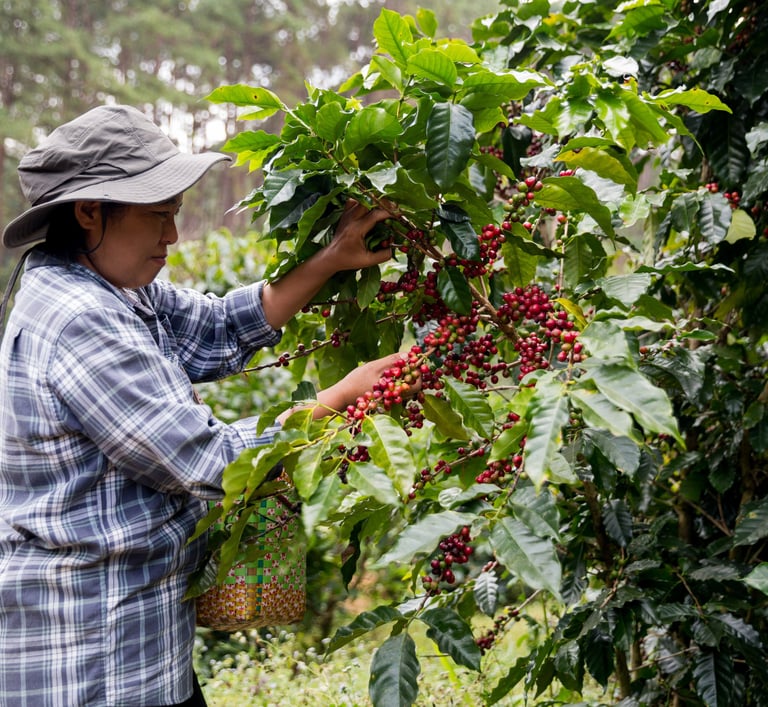
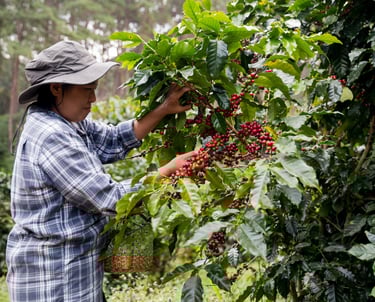
Through initiatives led by organizations like CRS and the local research institute FOFIFA, farmers along Madagascar’s eastern coast are now planting Robusta within multi-strata systems. This isn’t just environmentalism; it’s economics.
In this model, coffee isn’t alone. It sits beneath a canopy of shade trees (think banana, cinnamon, or native hardwoods) and alongside complementary cash crops like vanilla and cloves. This does two critical things:
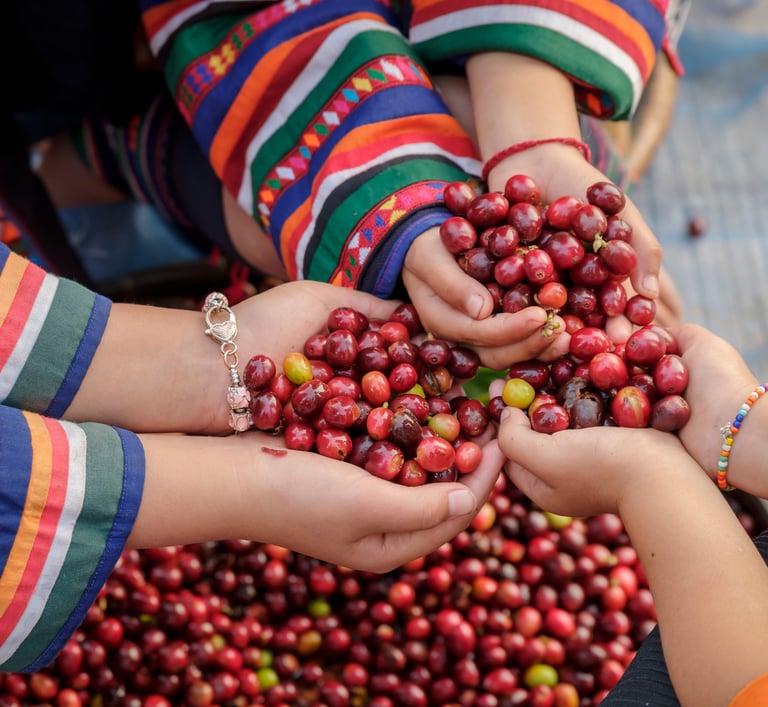
1. It stabilizes income. Coffee is harvested from September to October, coinciding with the lean season and the exact moment families need to pay school fees.
2. It improves quality. Proper shade regulates ripeness and reduces the stress that causes bitterness in poor-quality Robusta.
Propagation: The Science of Selection
You cannot plant just any cutting and expect greatness. This is one of the most technical steps in the process. Because Robusta (Coffea canephora) is highly cross-pollinated, its traits are wildly inconsistent if grown from random seed.
To solve this, Malagasy farmers, supported by government research, are increasingly turning to clonal propagation. By taking single-node cuttings from mother plants with proven cup quality and disease resistance, farmers essentially clone the best genetics. These cuttings are treated with rooting hormones (like IBA) and nurtured in humid propagation chambers for three to four months before they are hardened off for the field.
The Right Hole, The Right Time
Timing in Madagascar is dictated by the rain. Pits of roughly 45cm³ are dug well before the monsoon—usually around April—allowing the soil to weather. Planting happens in two windows: ball-planting in June with the onset of the southwest monsoon, or bag-planting in September as the heavy rains ease.
Crucially, spacing matters. Unlike the tight rows of high-yield industrial farms, Robusta in these systems is given room to breathe. The standard spacing of 3m x 3m allows for adequate airflow and reduces fungal pressure in the humid tropics.
A Note on “Anti-Transpirants”
In the drier western zones of Madagascar, historical research from the 1960s experimented with latex-based anti-transpirants to reduce shock during transplanting. While the practice of dipping foliage in latex is rare today, the lesson remains: reducing water stress at the moment of transplanting is vital for survival rates.
The Future is Fine Robusta
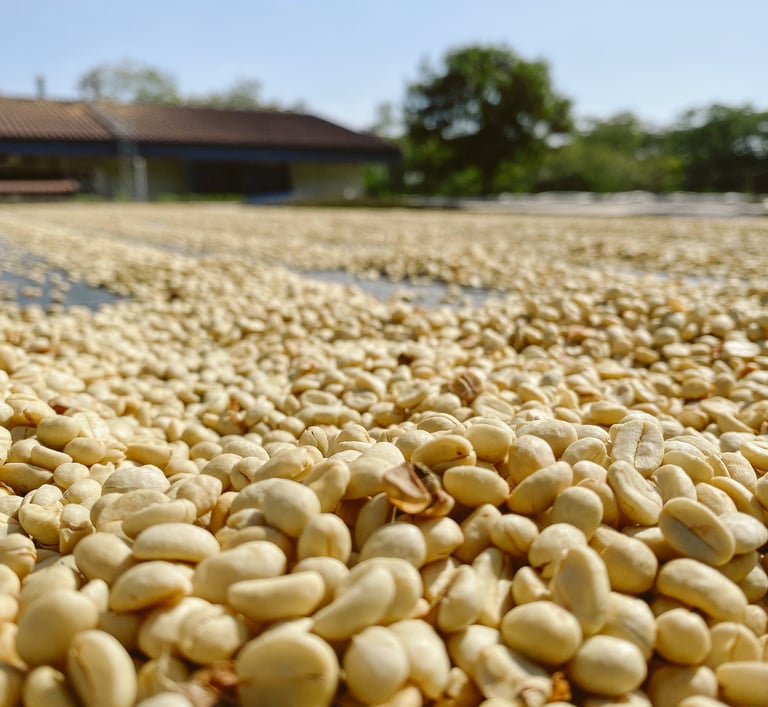
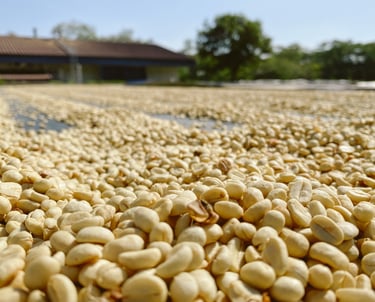
We are witnessing a pivot. Malagasy Robusta is no longer just a filler bean for espresso blends. With the backing of ACRAM (Robusta Coffee Agency of Africa and Madagascar), farmers are being trained in Good Agricultural Practices (GAP) and post-harvest processing innovations like honey and natural methods.
This means the coffee in your cup from Kanto isn't just "Robusta from Madagascar." It is the product of specific genetics, intentional agroforestry, and a harvest window that helps keep kids in school.
It’s not just coffee. It’s a system.
Kanto Coffee
The most generous cup of coffee on the island. We are a Madagascar Coffee Roasting Company.
Condition
Newsletter
info@kantocoffee.shop
+261 379 930 417
2026 © Kanto Coffee Madagascar Ltd. All rights reserved.




Antananarivo, Madagascar




Kanto Coffee Madagascar Ltd
Contact